
Conservation Framing
The aim of conservation framing is to preserve and protect the artwork or object over time, while always taking into consideration the principle of reversibility — that is, the possibility of returning the item to the condition it was in before it was framed.
This type of framing is suitable for all items of particular value, whether financial, artistic or sentimental.
When choosing a frame, we often focus solely on aesthetic qualities, overlooking the conservation aspects of the framing itself. Every work of art begins to deteriorate from the moment it is created. This process of degradation is inevitable, but conservation framing can help slow it down as much as possible.
A “microclimate” is created inside every frame. When properly designed and monitored, it can provide an excellent environment for preserving works of art and works on paper. Each technique requires specific care: drawings made with pencil, charcoal or pastel must be handled with particular attention. Digital and traditionally developed photographs require suitable mats and UV-filtering glazing to help maintain their colours over time.
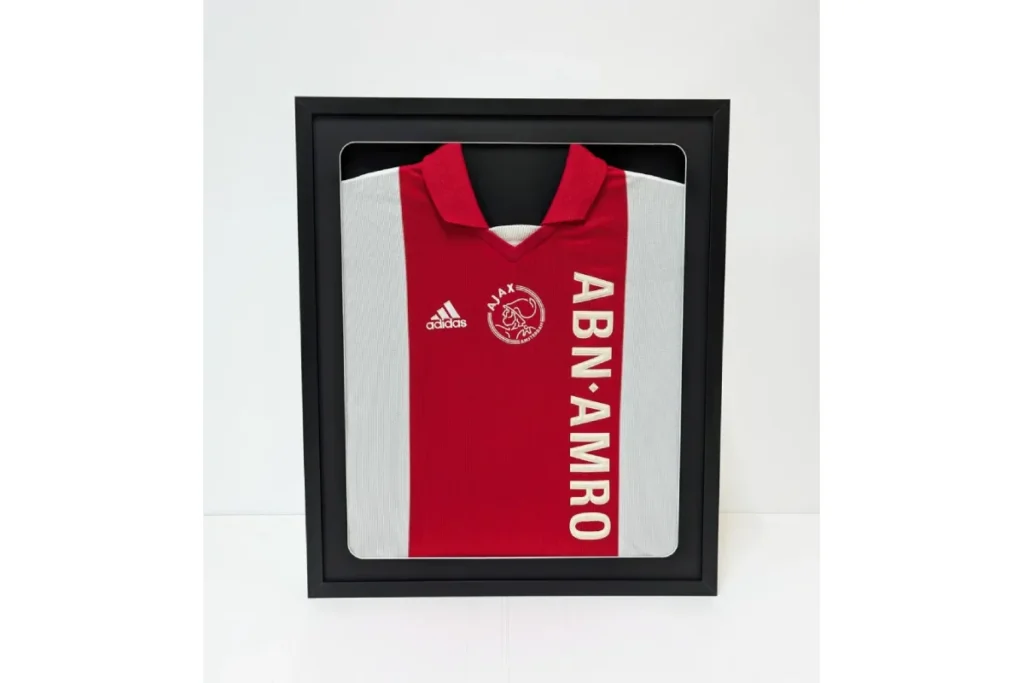
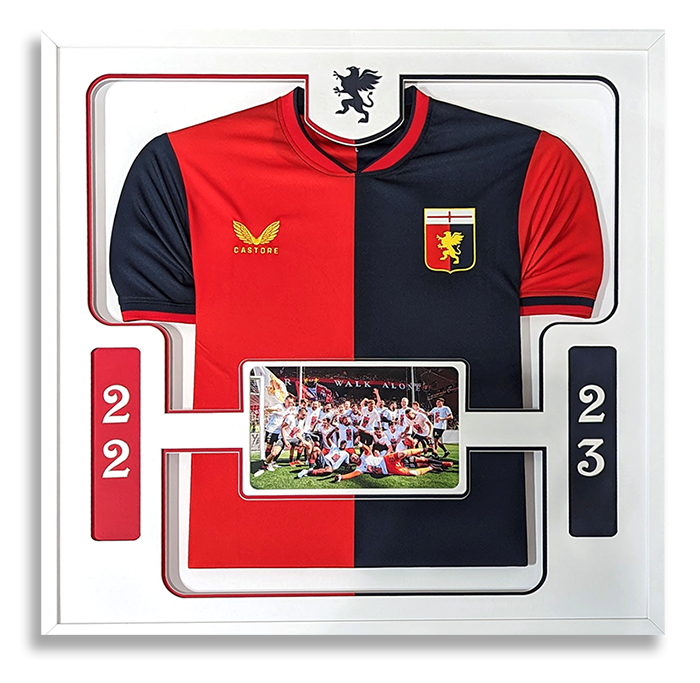
Textiles and objects of particular value require specific, customised conservation solutions.
The main materials used in conservation framing are:
GLAZING
Glazing is a very important element, protecting the artwork or object from atmospheric pollutants.
For conservation framing, the use of specialist glazing with UV protection is recommended to protect the artwork from light-induced deterioration, which is responsible for a significant proportion of conservation problems affecting works on paper.
Our glazing is produced by Tru Vue and is available with 70% and 99% UV protection.
THE MAT
The mat is in direct contact with the artwork and must be acid-free. Mats made from pure cellulose or 100% cotton are suitable for conservation framing because they do not contain lignin, which can contribute to the deterioration of paper.
The hinged mat is widely used in conservation framing. In this system, the artwork is attached to the backing rather than directly to the mat.
This allows the artwork to be easily removed from the frame while maintaining good protective support and without compromising its integrity.
TAPES AND ADHESIVES
Specialist tapes and adhesives, such as starch paste and methylcellulose, are used to ensure long-term conservation while providing effective yet gentle attachment.
The adhesives must not alter or damage the artwork and must ensure reversibility. The attachment should be only as strong as necessary to keep the artwork safely in position and should never be stronger than the artwork or its support itself.
In the event that the frame falls, the fixing tape should be the first element to give way and break, rather than the framed artwork itself.
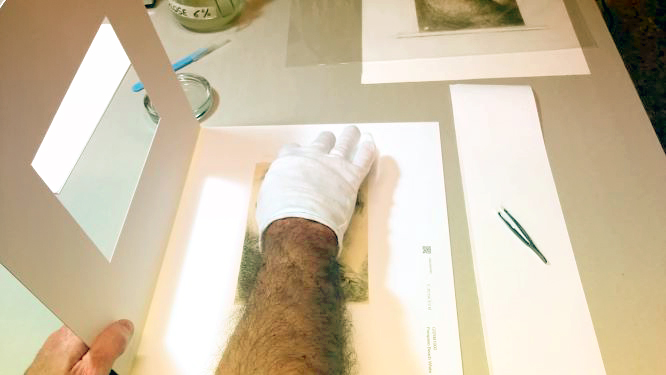
In addition to the materials used, it is essential to carefully consider and apply the most appropriate technique for each item being framed.
Depending on the type of support and the technique used to create the artwork, the most suitable framing and mounting solution is selected.
In conservation framing, we pay meticulous attention to every detail, carefully evaluating every aspect of the process.
This begins with keeping the work surface perfectly clean. The surface is replaced for every “operation” to ensure the highest level of quality and to prevent the artwork from coming into contact with any residue from previous work. We wear cotton gloves throughout the process to avoid contaminating the artwork, while specialised tools such as scalpels and tweezers allow us to work with surgical precision.
Many of these techniques have been studied and learned from experienced professionals working in leading international museums, while others have been developed or refined by us. One example is our loop mounting technique. Once attached to the artwork, it allows the piece to be repositioned several times on different supports while using the same attachment points, minimising intervention on the original support and therefore reducing the risk of deterioration.